
Immigration News and Updates
Renée Good’s Family Files Lawsuits Challenging Federal Immunity as ICE Shootings Continue
The increasingly violent reality of the Trump administration’s mass deportation agenda came into sharp focus again last week when plainclothes ICE officers opened fire on a car i…
Renée Good’s Family Files Lawsuits Challenging Federal Immunity as ICE Shootings Continue
The increasingly violent reality of the Trump administration’s mass deportation agenda came into sharp focus again last week when plainclothes ICE officers opened fire on a car in New York City within seconds of surrounding the vehicle, wounding 28-year-old Oscar Belgal while his terrified 5-year-old son sat in the back seat. This alarming use of force, echoing across the country as communities grapple with a sharp rise in immigration enforcement violence, provides context for a major legal battle unfolding in Minnesota.
Just days before the New York shooting, the family of Renée Good, a 37-year-old mother of three who was shot and killed by a U.S. Immigration and Customs Enforcement officer in Minneapolis earlier this year, filed two significant federal lawsuits against the U.S. government and top administration officials.
Good’s family and lawyers seek to use two distinct legal paths to force accountability through the U.S. federal courts, even though doctrines such as qualified and sovereign immunity usually protect federal law enforcement officers and the administration’s top political leaders from facing civil rights lawsuits. The twin lawsuits target both the officer that killed Good and the systemic policies that the lawsuit claims made her death inevitable and near-guaranteed impunity for the officer’s deadly use of force.
Minneapolis deadly encounter
On January 7, 2026, during a tense confrontation between protesters and federal immigration officers deployed to Minneapolis as a part of the administration’s “Operation Metro Surge,” ICE officer Jonathan Ross fired three shots into Good’s car as she attempted to drive away. One bullet struck her in the head, killing her.
While the Trump administration initially claimed that Good was a “domestic terrorist” trying to run over the officer, the lawsuit argues that video footage clearly shows Good steering her vehicle away and talking to the officers using deescalating language. Good was a U.S. citizen and had no criminal history. After Good’s death, the administration neither indicted nor fired Ross and he is still in the agency as an active ICE officer.
A double attack on impunity
To overcome the significant legal doctrines that protect ICE officers and the federal government from liability, the lawsuits — filed by Good’s partner and her brother — rely on a two-part approach primarily via two legal statutes.
Federal Tort Claims Act
The first claim uses the Federal Tort Claims Act (FTCA) and names the United Sates as the sole defendant. It accuses the government of battery, assault, false imprisonment, negligence, and intentional infliction of emotional distress that directly caused Good’s wrongful death. By using the FTCA, Good’s family and attorneys seek to hold the Trump administration liable for torts committed by federal immigration officers acting within the scope of their federal employment.
Typically, sovereign immunity protects the U.S. government from lawsuits; but Congress’ enactment of the FTCA provides an exception giving victims injured by government actions a mechanism for filing a lawsuit to seek damages. In the Good lawsuit, the FTCA legal claim focuses primarily on the mechanics of the shooting itself and the immediate liability of the government.
Ku Klux Klan Act of 1871
Parallel to the FTCA claim is the second and more politically explosive lawsuit, which uses a provision of the Reconstruction-era Ku Klux Klan Act of 1871. Congress designed the law to protect citizens from organized and systemic civil rights violations. At that time, local and state authorities routinely refused to prosecute Ku Klux Klan members for violence they inflicted upon newly freed Black Americans. Congress responded by enacting this law to explicitly enforce the newly ratified Fourteenth Amendment and ensure protection of civil and voting rights.
The Good lawsuit brings claims under two provisions of the statute, 42 U.S.C. Section1985(3) and 1986, to allege a broad Trump administration conspiracy to violate civil rights, naming not only Officer Ross, but also senior administration officials including Stephen Miller, Tom Homan, and former DHS Secretary Kristi Noem.
The Section 1985(3) claim alleges that these officials conspired with private actors, including far-right online provocateurs whose allegations against the Somali community in Minnesota led directly to the administration’s Operation Metro Surge, as well as private corporations whose technology was used to target neighborhoods for enforcement and track observers and protestors. The Section 1986 claim arises from the officials’ failure to prevent the wrongs of the alleged conspiracy.
At the core of the Ku Klux Klan Act claim, Good’s lawyers argue that her death was not an isolated operational error, but the “predictable result” of an unconstitutional campaign driven by racial animus targeting Hispanic and Somali communities. The family alleges that Trump administration officials deliberately structured federal immigration crackdowns to encourage aggressive, hostile confrontations, while signaling to rank-and-file officers that they would never face legal consequences for using excessive force.
Bringing claims under Sections 1985 and 1986 avoids the strict legal limitations of “Bivens actions” which in the past allowed individuals to sue federal enforcement officers for Fourth Amendment violations but which the Supreme Court has heavily curtailed in recent decades.
Systemic reckoning or indefinite impunity?
By linking executive policy to field-level operations, the lawsuit seeks to provide an alternative route to challenge immunity for high-ranking political appointees. If the federal court moves the case forward, it could establish a major precedent for holding top level administration officials accountable for the actions of ICE field officers. If the court does not allow the lawsuit to proceed, then the only way to ensure individual officials’ accountability for unlawful immigration enforcement violence will be for Congress to make overdue changes to outdated immigration laws which for decades have permitted immigration agent officers and agencies to operate with significant impunity. Congress could pass a law that would create a clear cause of action so that victims of constitutional violations committed by federal law enforcement officers can sue in federal court. When local police officers violate the Constitution, they can be sued in federal court; but when federal law enforcement agents commit the same violations there is no parallel recourse.
While the Good family seeks unspecified compensatory damages, their primary focus is public accountability. At an emotional Minneapolis press conference, Renee Good’s partner Becca Good stated: “The whole world had to watch as our entire universe was destroyed. We were all robbed.”
Following so closely on the heels of the recent New York City ICE shooting, the Renee Good lawsuits will test whether the federal judiciary is willing to hold federal officers accountable or continue to allow them to operate with near impunity on American soil.
The post Renée Good’s Family Files Lawsuits Challenging Federal Immunity as ICE Shootings Continue appeared first on American Immigration Council.
New Lawsuit Challenges Trump-Vance Administration Policies Threatening Green Card Applicants with Family Separation
USCIS Policies Upend Decades of Practice, Penalizing Eligible Immigrants for Seeking Permanent Residence from Within the United States Boston — Immigrant families, workers, educa…
New Lawsuit Challenges Trump-Vance Administration Policies Threatening Green Card Applicants with Family Separation
USCIS Policies Upend Decades of Practice, Penalizing Eligible Immigrants for Seeking Permanent Residence from Within the United States
Boston — Immigrant families, workers, educators, unions, and immigrant rights organizations filed a lawsuit today, challenging two Trump-Vance administration policies that make it significantly harder or impossible for eligible immigrants already living in the United States to obtain lawful permanent residence — commonly known as a green card — without leaving the country.
The lawsuit challenges new policies from U.S. Citizenship and Immigration Services (USCIS) that fundamentally alter the longstanding process known as “adjustment of status,” which Congress created to allow eligible immigrants already in the United States to apply for permanent residence without having to leave their families, jobs, and communities to pursue a green card abroad.
The challenged policies are:
- Adjustment of Status Policy, issued in May 2026: USCIS directs immigration officers to treat an applicant’s decision to seek permanent residence from within the United States, rather than leave the country for consular processing, as a negative factor in deciding their application. It also requires applicants to demonstrate “unusual or even outstanding” considerations to overcome that negative factor.
- Evidence, Requests for Evidence, and Notices of Intent to Deny Policy, issued in August 2026: Allows USCIS officers to deny applications without giving applicants an opportunity to provide additional evidence — including people who filed their green card applications before the new policies existed.
The policies change the rules for people who have followed the legal process to seek permanent residence and put them at risk of losing their ability to live and work in the United States, being separated from their families, and having their careers and education disrupted.
The organizational plaintiffs serve immigrants across the country who are pursuing permanent residence, including educators and researchers, health care workers, service workers, and people whose spouses and other close relatives are seeking green cards. The individual plaintiffs include people who have built careers, raised children, pursued their education, and established lives in the United States, but whose ability to remain with their families and communities is now threatened by the challenged policies. They are the American Association of University Professors (AAUP) and its Harvard University Chapter (Harvard AAUP) and Boston University Chapter (BU AAUP); Service Employees International Union (SEIU); SEIU Local 509; 32BJ SEIU; Americans for Immigrant Justice (AI Justice); and individual green card applicants Areli Esmeralda Rojas Correa, Miriam Esther Moreno Coto, Maria Francisca Guardado, Ikechi Obinna Nwaozuzu, Derly Sierra Palacios, and Julieth Melissa Camargo Figueroa.
Plaintiffs are asking the court to block and ultimately set aside the policies and require USCIS to adjudicate affected green card applications consistent with controlling precedent. They are represented by Democracy Forward, the American Immigration Council, the American Immigration Lawyers Association, and Colombo & Hurd.
“By weaponizing the green card process and threatening immigrant professors, researchers, and students with sudden deportation or forced family separation, this administration is sabotaging scientific innovation and turning our universities into hostile environments for the global talent that drives our country forward. Trump’s assault on immigrants is not only cruel and inhumane, it weakens the global competitiveness of our higher education institutions,” said Todd Wolfson, President of the American Association of University Professors.
“Immigrant faculty and students are essential to the success and vitality of U.S. higher education and research. By making it even more difficult for international scholars to work and live here, these cruel and counterproductive new policies reflect both the Trump administration’s larger anti-immigrant crusade and its unconstitutional war on universities. But the U.S. cannot be a global leader in education while cutting off the globe, and we will always stand up for members of our academic community when they are illegally threatened by this lawless administration,” said Kirsten Weld, co-president of the Harvard University Chapter of the American Association of University Professors.
“BU AAUP condemns the Trump administration’s new green card policies, which impose onerous and opaque rules on our international faculty and students. The revised regulations jettison precedent and due process and threaten the ability and freedom of faculty and students to research, teach, and learn. They harm valued members of our community and interfere with Boston University’s stated mission as an international research institution. More, in targeting noncitizen scholars and imposing external rules that seek to limit who can research and teach at American universities, the U.S. Citizenship and Immigration Services strikes at academic freedom—the core principle of higher education,” said Mary Battenfeld, co-president of the Boston University Chapter of the American Association of University Professors.
“SEIU’s 2 million members include physicians, long-term care workers, janitors, security officers, airport workers, and others. Many SEIU members are foreign-born U.S. citizens, lawful permanent residents, and immigrants authorized to work in the United States. We oppose any policy that makes it harder for working people to do their jobs and provide for their families,” said SEIU Secretary-Treasurer Rocío Sáenz. “If implemented, this directive will impact people who are following the rules and navigating an immigration system and process already full of red tape. Our government should make it easier, not harder, to keep families together and workers in their jobs so they can continue contributing to their communities and our economy.”
This directive disrupts legal immigration and pathways to permanent residency, threatening our members’ ability to earn a living, and further straining our healthcare system if these workers are forced to leave the United States, said David Foley, President of SEIU Local 509 “It is clear that the focus of this administration has never been on keeping our communities safe, but rather on expelling as many immigrants as possible from our communities by any means necessary. The people affected are our union siblings, our family members, and our friends. They deserve dignity and the opportunity to remain with their families while they navigate their path toward permanent residency.”
“The Trump administration’s animosity towards immigrants is so deep that they are now punishing those who have been working their way to becoming permanent legal residents by following the same rules followed by countless immigrants for generations. As a union with a majority immigrant membership, we object to the harm this could do to families and communities everywhere, and we deplore the administration’s determination to close the doors on immigrants in every way they can as a thoroughly un-American act of naked cruelty,” said Manny Pastreich, President, 32BJ SEIU
“Congress created a process that allows eligible people who are already living in the United States to pursue permanent residence without uprooting their lives and leaving the country. The executive branch cannot rewrite that system and then treat people’s lawful actions as a reason to deny them said permanent residency,” said Skye Perryman, President and CEO of Democracy Forward. “These policies are changing the rules on families, workers, students, and others who have followed the legal process and built their lives here, putting them at risk of separation from their loved ones and communities. We are proud to represent our clients in challenging these unlawful policies and protecting the process Congress established.”
“For decades, people who met the requirements to apply for a green card from inside the United States were able to do so without having that choice count against them. But under these new, radical policies, the Trump administration is trying to reverse decades of practice and punish people for using a legal pathway that Congress created,” said Leslie Dellon, a senior attorney for business immigration at the American Immigration Council. “This is a major shift with very real consequences: spouses and parents separated from their families, workers forced to leave their jobs, students and researchers yanked away from their work, and people potentially stranded abroad for months or even years waiting for a consular appointment. At a time when our immigration system is already buried in years-long backlogs, the Trump administration is creating even more uncertainty and disruption for people who are simply trying to follow the rules.”
“Our immigration system should embody the values that define America: fairness, transparency, due process, and adherence to the rule of law. AILA is litigating this case on behalf of our more than 18,000 members and the individuals, families, and businesses they represent because no administration should be permitted to rewrite the rules unilaterally or place itself above the law. The Constitution established checks and balances for a reason. We urge the courts to continue serving as a safeguard against executive overreach, and we call on Congress to exercise its oversight authority to protect the integrity of our immigration system and ensure it serves the national interest while remaining true to our shared values,” said Jeff Joseph, President of the American Immigration Lawyers Association.
“These policies do more than disrupt individual green card cases. They create uncertainty for the highly skilled professionals who drive American research, health care, education, and innovation. If the United States wants to remain competitive in attracting and retaining global talent, it cannot make lawful permanent residence more arbitrary and less predictable for people who are already building lives here,” said Sarah Wilson, Partner & Federal Immigration Litigation Practice Leader.
The consequences are already significant. According to the complaint, the challenged policies threaten families with prolonged separation, workers with the loss of employment and work authorization, students and educators with disruptions to their studies and careers, and employers and communities with the loss of people who have built their lives in the United States.
The case is American Association of University Professors et al. v. U.S. Department of Homeland Security et al.
Read the filing here.
The post New Lawsuit Challenges Trump-Vance Administration Policies Threatening Green Card Applicants with Family Separation appeared first on American Immigration Council.
Fifth Circuit Hears Major Case Over Right to Challenge Immigration Detention
Case will determine whether longtime U.S. residents can be detained without a meaningful opportunity to ask a judge for release NEW ORLEANS, Louisiana, Sept. 24 2026 — On Thurs…
Fifth Circuit Hears Major Case Over Right to Challenge Immigration Detention
Case will determine whether longtime U.S. residents can be detained without a meaningful opportunity to ask a judge for release
NEW ORLEANS, Louisiana, Sept. 24 2026 — On Thursday, September 24, the full U.S. Court of Appeals for the Fifth Circuit heard arguments in a major case over whether the Constitution permits the federal government to detain immigrants without ever providing them a bond hearing where they can challenge whether their detention is necessary.
The consolidated case involves three longtime Texas residents, all fathers of U.S.-citizen children and none with criminal histories. Each was arrested following a routine traffic stop and detained by immigration authorities without an opportunity to appear before a judge and demonstrate that he posed no danger to the community or flight risk — the only valid reasons to keep someone in detention during their immigration proceedings.
The American Immigration Council, the National Immigration Project, Garza & Narvaez PLLC, and the Law Offices of Stephen A. Lagana represent the three men.
In court today, attorneys argued that under the Constitution, the government cannot lock someone up in immigration detention without giving them a real chance to go before a judge and challenge their imprisonment.
“This case is about a basic constitutional right: if the government wants to lock someone up, it should have to explain why. The Trump administration is arguing that it can hold people in immigration detention without ever proving that doing so is necessary. This turns a fundamental constitutional protection on its head and gives the government extraordinary power over people’s freedom,” said Rebecca Cassler of the American Immigration Council, who argued the case today before the full Fifth Circuit court.
Federal district courts previously ruled that detaining the three men without bond hearings violated their constitutional right to due process. A three-judge Fifth Circuit panel later agreed, ruling that the Constitution protects people who have entered and built lives in this country regardless of their immigration status. The full Fifth Circuit subsequently vacated that decision and agreed to rehear the case.
“Today the government made the unprecedented argument that it can jail immigrants without ever having to explain why,” said Ellie Norton, Supervising Attorney, of the National Immigration Project. “That flies in the face of years of Supreme Court case law and the Constitution. Our clients are three fathers, community members, and churchgoers who have each lived in this country for over a decade. All they ask is for the opportunity to challenge whether they actually need to be behind bars and separated from their families while their immigration cases are pending. That is a cornerstone of our justice system and we hope that the Court will uphold it.”
The case is part of a nationwide fight over whether the government can lock up immigrants – including those who’ve lived in the U.S. for years or even decades – without giving them a chance to ask a judge for release. Hundreds of courts across the country, in thousands of cases, have repeatedly rejected the administration’s position, concluding that it violates either federal immigration law or the Constitution’s guarantee of due process when a person is thrown into prison.
The Fifth Circuit’s decision could affect thousands of people held in immigration detention across Texas, Louisiana, and Mississippi, states where a large share of the nation’s detained immigrants are held. Six other federal circuit courts have held that locking up longtime U.S. residents in immigration detention without giving them a chance to ask a judge for release would violate the Constitution. If the Fifth Circuit agrees with the government, this will be the first federal circuit court to find this detention without process constitutional.
More about the lawsuit here.
MEDIA CONTACTS
Elyssa Pachico, epachico@immcouncil.org
Lilly Gonzalez, media@nipnlg.org
The post Fifth Circuit Hears Major Case Over Right to Challenge Immigration Detention appeared first on American Immigration Council.
How Maybelle Center Made the Belonging Barometer Part of Everyday Practice
For more than 30 years, Maybelle Center has worked alongside adults experiencing financial hardship, mental health challenges, and social isolation in downtown Portland, Oregon. To…
How Maybelle Center Made the Belonging Barometer Part of Everyday Practice
For more than 30 years, Maybelle Center has worked alongside adults experiencing financial hardship, mental health challenges, and social isolation in downtown Portland, Oregon. Today, the organization describes itself as a community health organization because it believes health begins with belonging. Through neighborhood programs, affordable housing, and assisted living, Maybelle Center helps people build lasting relationships and become known, valued, and connected.
When Maybelle Center shifted its mission from fighting social isolation to intentionally building belonging, staff encountered a familiar challenge: How do you measure belonging?
“We wanted to measure belonging,” recalls Shane Skinner, Lead Member Inclusion Coordinator. “But how can you measure something so subjective?” The answer was the Belonging Barometer.
As Maybelle Center developed its organizational theory of change, staff found themselves researching belonging from dozens of different sources. They wanted confidence that their programs were grounded in evidence. When they discovered the Belonging Barometer, they immediately recognized the framework gave them a research-backed definition of belonging that was both comprehensive and practical.
The Barometer took belonging from being an abstract concept and broke it into measurable components that staff could understand, discuss, and intentionally strengthen through their work.
One of Maybelle Center’s biggest takeaways is that implementing the Belonging Barometer doesn’t have to be complicated. Serving approximately 200-250 active members, the organization launched its first survey using simple tools already available to them.
They:
- Introduced the survey through their monthly newsletter.
- Mailed paper surveys with prepaid return envelopes.
- Asked volunteers to enter responses into an Excel spreadsheet.
- Partnered with a board member who had data expertise to analyze the results.
It just took a commitment to learning from the people they serve.
While the annual Belonging Barometer survey provides valuable data, Maybelle Center quickly realized the framework could also shape programming. Rather than trying to improve every dimension of belonging at once, the team selected three priority building blocks from the Barometer’s local belonging framework to guide every activity they offer.
Those 3 guiding priorities are:
- Helping people feel welcomed and included.
- Helping people feel valued for who they are and what they contribute.
- Creating spaces where people feel comfortable expressing different opinions.
Before each event, staff intentionally ask: How will this activity strengthen belonging? Sometimes the answer is an icebreaker, changing how conversations are facilitated, or creating more opportunities for participants to contribute.
After each program, the team evaluates whether those belonging goals were achieved and uses what they learn to improve future activities. Each year, Maybelle Center plans to administer the full Belonging Barometer survey to understand how members’ experiences change over time. The findings will help staff identify which dimensions of belonging are growing and where more attention is needed. Rather than relying on assumptions, they’ll use data to guide future decisions. As Skinner puts it: “Belonging becomes the compass.”
Maybelle Center’s experience shows that you don’t need perfect data, a large staff, or a significant budget to begin measuring belonging. You can start with one survey and choose just a few dimensions of belonging to focus on.
Most importantly, you can begin using the Belonging Barometer to understand and strengthen your community. As Skinner says, the Belonging Barometer gives community leaders something many have been searching for: a tangible way to measure belonging.
Ready to get started?
Download the free Belonging Barometer Quick Start Guide and survey questions to begin measuring belonging in your community.
The post How Maybelle Center Made the Belonging Barometer Part of Everyday Practice appeared first on American Immigration Council.
New Report Shows Immigrants in Mecklenburg County Paid $2.6 Billion in Taxes and Held $7 Billion in Spending Power in 2024
Mecklenburg County, NC, September 18, 2026 – A new report, Immigrants in Mecklenburg County released today by the American Immigration Council—in partnership with the City o…
New Report Shows Immigrants in Mecklenburg County Paid $2.6 Billion in Taxes and Held $7 Billion in Spending Power in 2024
Mecklenburg County, NC, September 18, 2026 – A new report, Immigrants in Mecklenburg County released today by the American Immigration Council—in partnership with the City of Charlotte, the Charlotte International Cabinet, and International House—underscores the crucial role immigrants play in the region’s labor force, business creation, and consumer spending power.
Although immigrants made up 17.0 percent of the county’s total population, they represented 20.2 percent of its working age population, 20.1 percent of its employed labor force, and 26.7 percent of its workers in science, technology, engineering, and math (STEM) fields in 2024. Immigrants in Mecklenburg County were 52.9 percent more likely to be an entrepreneur than their U.S.-born counterparts and immigrant entrepreneurs generated over $659.8 million in business income.
The new report was awarded as a part of the Gateways for Growth Challenge, a competitive opportunity for localities to receive research support and/or technical assistance from the American Immigration Council and Welcoming America to improve immigrant inclusion in their communities.
The report will launch during International House’s The Journey: Share Your Voice; A Community Exhibition and a Celebration of Student Art and Collaborative Research event on Saturday, September 19, 2026, at Queen City Art in Charlotte. The event will showcase artwork by children of immigrants created through a Foundation for Child Development-funded project with UNC Charlotte’s Center for Migration and Diaspora Studies and Urban Institute, International House, Queens University of Charlotte, and other community partners. The artwork is the first phase of a broader effort to elevate the voices and perspectives of children of immigrants and bring their experiences into conversations about Charlotte’s future.
“Behind every number in this report is a person, a family, and a story that is part of Charlotte. Gateways for Growth matters because it helps us understand our community not only through data, but through the lived experiences of the people who call this city home. For local government, that understanding carries a responsibility: to listen, to remove barriers, to strengthen connections to opportunity and services, and to make sure people feel seen in the decisions that shape their lives,” said Saira Estrada, Language Access & Immigrant Integration Coordinator for the City of Charlotte. “As Charlotte continues to grow, we want every resident to know they belong in that growth and have a place in the future we are building together.”
“The report tells a story through data. Immigrants contribute to the high quality of life we enjoy in Mecklenburg County, facilitating economic growth, infusing talent and innovation, and revitalizing neighborhoods. Strengthening our efforts to help immigrants thrive is ultimately an investment in Charlotte,” said Susan Bird, Executive Director of International House.
“The report Immigrants in Mecklenburg County underscores how essential immigrants are to our community’s economic and cultural vitality. It is equally important to recognize the experiences and contributions of their children. Children of immigrants make up one in four children in Mecklenburg County, yet their voices are often missing from conversations about our community’s future. Today’s Share Your Voices event begins to bring those voices forward, offering a glimpse into how they see their families, communities, and futures,” said Stephanie Potochnick, director of UNC Charlotte’s Center for Migration and Diaspora Studies.
“Immigrants are helping power Mecklenburg County’s economy and strengthen its neighborhoods. As captured in this report, their contributions as entrepreneurs, workers, and innovators, combined with the cultural richness they bring to the county, make them an indispensable part of the county’s present and future prosperity,” said Juan Avilez, policy associate of state and local initiatives at the American Immigration Council.
“Much of what makes a community welcoming happens where no one is watching — in planning meetings, data reviews, and quiet conversations between people trying to get it right. Charlotte’s participation in Gateways for Growth is all of that, mostly invisible to residents, but it shapes whether people can access opportunity, whether their voices are included, and whether they truly feel at home here,” said Sorayda Díaz León, Senior Manager of Welcoming Network at Welcoming America.
The new research report, Immigrants in Mecklenburg County, finds:
- Immigrants are fueling the growth in Mecklenburg County. Between 2019 and 2024, the total population of the county increased by 7.1 percent. During that same time, the immigrant population increased by 20.2 percent. As a result, 42.7 percent of the total population growth was attributable to immigrants.
- Immigrants are helping the county meet its labor force demands. In 2024, immigrants were 24.0 percent more likely to be of working age than their U.S.-born counterparts.
- Immigrants support the federal safety net. Immigrants contributed $1.8 billion in federal taxes and $803.7 million in state and local taxes in Mecklenburg County in 2024.
- Immigrants are helping Mecklenburg County meet its rising labor needs in key industries. While making up 17.0 percent of the county’s total population in 2024, immigrants represented 20.5 percent of transportation and warehousing workers, 49.8 percent of construction workers, and 19.2 percent of hospitality workers.
- Immigrants are building deep roots in Mecklenburg County. As of 2024, 72.6 percent of immigrants in the county had resided in the United States for more than five years.
Read the full research brief at the Council’s website.
###
About the American Immigration Council
The American Immigration Council works to strengthen America by shaping how America thinks about and acts towards immigrants and immigration and by working toward a more fair and just immigration system that opens its doors to those in need of protection and unleashes the energy and skills that immigrants bring. The Council brings together problem solvers and employs four coordinated approaches to advance change—litigation, research, legislative and administrative advocacy, and communications. Follow us on Bluesky @immcouncil.org and on Instagram @immcouncil.
About Welcoming America
Welcoming America is a nonprofit, nonpartisan organization that leads a movement of inclusive communities becoming more prosperous by ensuring everyone belongs. Through the Welcoming Network, we work to change systems and culture by providing communities with the roadmap they need to create welcoming policies and share new approaches to inclusion to create an environment where everyone can truly thrive. Learn more at www.welcomingamerica.org.
About City of Charlotte
The Charlotte International Cabinet creates awareness of Charlotte as an international city by promoting exchange between Charlotte and its Sister Cities, welcoming all citizens, residents and visitors, regardless of ethnicity or language skills, supporting global education programs, encouraging further growth of the international business sector and enhancing Charlotte’s non-profit international sector.
About International House
Established in 1981, International House is a nonprofit dedicated to helping immigrants and international culture thrive in our community. International House helps immigrants through legal assistance, English classes and other services, and provides opportunities for cross-cultural connections that foster understanding and build community. Learn more at https://www.ihclt.org/about.
The post New Report Shows Immigrants in Mecklenburg County Paid $2.6 Billion in Taxes and Held $7 Billion in Spending Power in 2024 appeared first on American Immigration Council.
DHS Oversight Agency Issues Scathing Report of Conditions at ‘Alligator Alcatraz’
The U.S. Department of Homeland Security’s (DHS) own Office of Inspector General (OIG), an office that seeks to provide independent oversight and accountability within the de…
DHS Oversight Agency Issues Scathing Report of Conditions at ‘Alligator Alcatraz’
The U.S. Department of Homeland Security’s (DHS) own Office of Inspector General (OIG), an office that seeks to provide independent oversight and accountability within the department, issued a damning report last week about the conditions of confinement at Florida’s soft-sided immigration detention facility known as “Alligator Alcatraz.”
The report described the troubling conditions OIG found during its unannounced inspection of the facility in January 2026 and made recommendations to ameliorate the issues OIG observed. Even though Alligator Alcatraz closed in June 2026, some of the issues noted in the OIG report are common among detention facilities that hold people in immigration custody.
OIG’s report provided gruesome details about the conditions that people detained at this facility experienced. Detained individuals were allowed to shower only three times a week, and the showers were infested with bugs. People complained of a lack of clean drinking water in part because the facility gave them only one plastic drinking cup and nowhere to properly clean or store them. OIG also reported that the overcrowding at the facility was problematic, noting that it provided less than half of the living space required by federal detention standards.
In perhaps one of the most shocking findings, the OIG inspection found that facility staff held individuals in literal cages for up to two hours.
The cages were approximately 18 square feet, roughly the size of a phone booth, and were equipped with locking systems. In its response, the facility claimed the cages were “calming” areas, but OIG found that in at least one instance, staff used the cages as punishment. The OIG stated that it had never seen this type of restraint.
The report also noted that people in this detention center had insufficient access to legal resources. Phones for legal calls did not work, and the facility did not have a law library. The OIG report concluded that these conditions could have impeded access to counsel for individuals detained at the facility.
ICE tried to evade oversight and accountability over these conditions by passing the buck. In its response to the OIG report, ICE claimed that the state of Florida, not ICE, ran Alligator Alcatraz under the authority of a 287(g) Memorandum of Understanding. The gray area as to which entity was actually in charge of the facility may have allowed these conditions to propagate, as facility staff told OIG they did not know which standards applied. However, ICE was heavily involved in the facility’s administration. ICE officers were constantly present at the detention center and individuals detained received ICE’s Detainee Handbook.
Unfortunately, some of the conditions described in the OIG report are common in detention facilities across the country. In September 2022, for example, OIG reported that the Torrance County Detention Facility in New Mexico also failed to meet health and safety standards and limited access to counsel for those detained at the facility. In July 2023, OIG found that the Stewart Detention Center in Lumpkin, Georgia also compromised the health and safety of people at the detention facility.
The Trump administration, with the cooperation of willing state officials like those in Florida, is expanding the use of immigration detention at alarming rates. As of July, the number of people in immigration detention was more than 65,000, and the Trump administration’s goal was to reach 108,000 detention beds by the beginning of 2026.
The rapid and continuous expansion of immigration detention suggests a full-steam-ahead approach without any regards for the rights of those detained. When this facility opened, President Trump said he would like to see more like it in more states, praising the compound by saying, “It might be as good as the real Alcatraz.”
Florida Governor Ron DeSantis dismissed the concerns raised in the report. The governor’s communications director said about the cages, “We’d make [them] even smaller if we could.” It is deeply concerning that, despite its closure, Alligator Alcatraz could continue to be a model for states to get deeper into the business of detaining immigrants, while evading responsibility for civil rights violations.
Further, the OIG report highlights the continued need for robust oversight mechanisms, which the Trump administration has worked to dismantle or sideline. A November 2025 report indicates that the president removed 17 Inspectors General, left Inspector General offices without leadership and defunded some of these offices, minimizing their capacity to conduct investigations. The administration also decimated DHS’ Office for Civil Rights and Civil Liberties and the Office of the Immigration Detention Ombudsman, which investigated civil rights violations and issues at detention facilities, respectively. Transparency on these issues cannot be left to the states, as Florida law enforcement agencies have actively blocked access to records under state law.
Under the Trump administration, immigration detention will continue to expand. Congress has authorized unprecedented funding to DHS, none of which is going to improve conditions at these facilities. As problems with conditions at detention facilities increase, the remaining oversight agencies and Congress must — at the very least — ensure that the lives of people ICE chooses to detain are not in danger.
The post DHS Oversight Agency Issues Scathing Report of Conditions at ‘Alligator Alcatraz’ appeared first on American Immigration Council.
New Data: U.S. Welcomes High-Skilled Workers, but Path to Permanent Residence Is Growing More Uncertain
Record Backlogs, Visa Shortages, and Increasing Scrutiny Are Straining the Employment-Based Immigration System WASHINGTON, D.C., August 18 — The United States continues to …
New Data: U.S. Welcomes High-Skilled Workers, but Path to Permanent Residence Is Growing More Uncertain
Record Backlogs, Visa Shortages, and Increasing Scrutiny Are Straining the Employment-Based Immigration System
WASHINGTON, D.C., August 18 — The United States continues to rely on high-skilled workers from around the world to stay globally competitive in key industries including technology, engineering, and health care. However, new data shows increasing pressure across the employment-based immigration system, with workers seeking permanent residence facing greater uncertainty and mounting obstacles.
Two new reports from the American Immigration Council examine a decade of U.S. Citizenship and Immigration Services (USCIS) data on nonimmigrant and immigrant petitions for high-skilled workers. The reports find that demand for high-skilled workers remains strong, with high approval rates across several nonimmigrant visa categories, including H-1B.
READ THE REPORTS HERE AND HERE
But they also point to growing pressure on USCIS as the agency struggles to keep pace with rising demand for temporary workers, contributing to increasing backlogs. For workers seeking employment-based green cards, they face an even more uncertain way forward, due to record backlogs, limited visa availability, longer waits, and heightened scrutiny in certain categories.
“The United States continues to recruit and rely on high-skilled workers from around the world, but for many of those workers, building a permanent future here means navigating years of uncertainty,” said Nan Wu, director of research at the American Immigration Council. “If the United States wants to compete for the world’s best talent, it needs an immigration system that allows employers and workers to plan for the long term with greater confidence.”
The Council’s analysis found that USCIS is still approving large numbers of petitions for temporary high-skilled workers. However, the agency is showing signs of strain and increasingly failing to keep pace with demand.
The challenges become even more significant for workers seeking permanent residence. USCIS is falling behind on employment-based green card processing, backlogs are growing sharply, and workers can spend years waiting to complete the process even after USCIS has approved their immigrant petitions. In some high-skilled green card categories, denials have also risen sharply.
“These findings show a system in which employers and workers have to spend years navigating a backlogged system. That kind of uncertainty makes it harder for workers to build their lives here and for employers to retain the talent they need,” said Steve Hubbard, senior data scientist at the Council.
READ THE REPORTS HERE AND HERE.
Top findings include:
- Temporary high-skilled worker petitions continue to receive high approval rates, but processing challenges are growing. Nearly 98 percent of H-1B petitions were approved in FY2025, while approval rates for L-1 and O categories stayed above 90 percent. At the same time, USCIS struggled to keep up with rising petitions, more than 456,000 for the H-1B category in FY2025 alone, leading to a growing backlog.
- Workers seeking employment-based green cards face a fraught path forward. The backlog of employment-based green card petitions has more than quadrupled over the past decade, reaching a record 180,439 pending cases by the end of FY2025. At USCIS’s current processing pace, it would take about more than 9 months just to clear that backlog. Many applicants are paying additional fees to get faster processing, generating an estimated $300 million in fees for USCIS in FY2025.
- Denial rates rose in key employment-based categories. At one point in FY2025, USCIS was denying roughly 1 in 6 employment-based immigrant petitions. In two categories intended for especially accomplished workers, the EB-1A and the EB-2 NIW, denial rates almost doubled during FY2025.
- Visa availability remains a major bottleneck. Once USCIS approves a petition for an employment-based green card, the process doesn’t end there. Employment-based green cards are capped by law, so workers can spend years waiting for a visa number to become available even after USCIS has already approved their application. By the end of FY2025, more than 642,000 approved workers were still waiting for a visa number to become available.
“The U.S. government is basically telling high-skilled workers, we want your talent for to build companies, conduct research, treat patients, and grow the U.S. economy, but we can’t tell you whether you’ll be able to build a future here. That is not a serious approach for competing for global talent,” said Wu. “If we want to attract and retain these high-skilled workers, we need an immigration system that provides them with more long-term certainty.”
READ THE REPORTS HERE AND HERE
The post New Data: U.S. Welcomes High-Skilled Workers, but Path to Permanent Residence Is Growing More Uncertain appeared first on American Immigration Council.
As Federal Immigration Enforcement Expands, New Playbook Helps State and Local Leaders Respond
New co-branded platform equips state and local leaders with practical tools for responding when federal immigration enforcement affects communities NEW HAVEN, CT / WASH…
As Federal Immigration Enforcement Expands, New Playbook Helps State and Local Leaders Respond
New co-branded platform equips state and local leaders with practical tools for responding when federal immigration enforcement affects communities
NEW HAVEN, CT / WASHINGTON, DC — As cities, counties, and states navigate responding to the impact of federal immigration enforcement policies, the American Immigration Council (AIC) and Integrated Refugee & Immigrant Services (IRIS) are launching the Immigration Response Playbook, a new online resource for state and local leaders. The Playbook brings together policy examples, legal frameworks, and other tools from jurisdictions across the country to help communities understand their options and make informed decisions.
The Playbook addresses a need that both organizations consistently hear from municipal and state partners: leaders want to protect their communities, but don’t always know what others have done or what legal authority they have to act. This resource brings that knowledge together in one place — organized for people making decisions in real time.
“The Trump administration is maximizing fear and confusion to intimidate our communities, inflicting a new level of cruelty with its lawless actions,” said William Tong, the Connecticut Attorney General. “I thank IRIS and the AIC for compiling this comprehensive playbook of strategies and policy tools to strengthen local and state protections against federal overreach. The Office of the Attorney General will continue to work closely with IRIS and community partners to respect, honor and protect immigrants and immigrant families.”
The collaboration combines IRIS’s platform infrastructure and deep expertise in immigrant and refugee services — built over more than 40 years in Connecticut — with AIC’s policy research depth and relationships across its state and local programming to support immigrant integration efforts nationwide. The result is a resource informed not just by legal analysis, but by the actual experiences of offices doing this work on the ground.
“Local and state leaders are facing urgent questions as federal immigration enforcement actions create fear or confusion in their communities. This playbook brings together practical tools, legal frameworks, and examples from across the country so that local leaders can make informed decisions grounded in what their community needs,” said Rich André, AIC Director of State and Local Initiatives.
The Playbook includes:
- Real-world policy examples from cities and states that have navigated enforcement actions, community protection measures, and related legal questions
- Legal frameworks and implementation tools, drawn from AIC’s policy research and updated as federal enforcement priorities shift
- Links to existing IRIS and AIC resources, including IRIS’s New Americans platform and AIC’s research and analysis
- Regular updates reflecting emerging trends, new jurisdictional examples, and evolving legal guidance
“State and local leaders have been reaching out to us asking what they can do to protect their communities. Our research led us to AIC. Like us, they know that these leaders do better when they can learn from one another. This playbook puts that idea into action, both policy expertise and field-tested practice in a regularly updated, efficient, searchable knowledge hub,” said Maggie Mitchell Salem, IRIS Executive Director.
The Immigration Response Playbook is available now at playbook.irisct.org and will be updated on an ongoing basis.
About IRIS: Integrated Refugee & Immigrant Services
IRIS welcomes refugees and other immigrants, helps them rebuild their lives, pursue their dreams, and contribute to the vitality of their communities. Founded in 1982, IRIS advances economic mobility, legal stability, language equity, and civic engagement through its New Americans platform. Learn more at irisct.org.
About the American Immigration Council
The American Immigration Council works to create a more welcoming and fair immigration system. Through litigation, research, and programs that expand access to legal assistance, the Council helps ensure immigrants are embraced, communities are enriched, and justice prevails for all. Follow us on BlueSky @immcouncil.org and Instagram @immcouncil.
Media inquiries:
IRIS: Maggie Mitchell Salem, msalem@irisct.org
American Immigration Council: Elyssa Pachico, epachico@immcouncil.org
The post As Federal Immigration Enforcement Expands, New Playbook Helps State and Local Leaders Respond appeared first on American Immigration Council.
National Study: Only 1 in 4 Americans Believe They Can Influence Outcomes In Their Local Community
Washington, DC — Most Americans feel safe and comfortable in their communities, but only about one in four believe they have any real influence over how those communities are run…
National Study: Only 1 in 4 Americans Believe They Can Influence Outcomes In Their Local Community
Washington, DC — Most Americans feel safe and comfortable in their communities, but only about one in four believe they have any real influence over how those communities are run, according to a new national study released today.
The Center for Inclusion & Belonging at the American Immigration Council has fielded a second national wave of The Belonging Barometer, this time focusing on belonging at the local level. The study offers a nuanced and actionable picture of Americans’ sense of community belonging and shows there is great opportunity to build belonging by investing at the local level.
Belonging means feeling emotionally connected to others, safe to be yourself, and able to help shape the communities where you live, work, and participate. The findings reveal that local belonging comprises more than simply feeling connected. While many Americans feel accepted in their communities, far fewer feel able to influence local decisions or help shape their community. This gap is especially pronounced among Americans 65 and older, who report the highest level of belonging (48%) compared to younger adults ages 18-29 (34%).
Key findings of The Belonging Barometer: Understanding Belonging Where It Is Lived include:
- 61% of Americans either do not have a clear sense of community belonging or feel excluded. A relatively low percentage (14%) of Americans report actually feeling excluded. Instead, the majority (47%) of Americans live in a state of ambiguity, uncertain about their place in their community, providing an opportunity for significant improvement through local action.
- Local media matters. People who watch or follow local news at least weekly are significantly more likely to feel a strong sense of local belonging. National news consumption shows no such relationship.
- Financial stability is linked to an increased sense of belonging. As Americans’ incomes increase, so does their sense of local belonging. Just 34% of Americans earning less than $50,000 annually report feeling a sense of belonging in their local community, compared with 47% of those earning more than $100,000.
- People feel safe in their communities, but not powerful. Respondents report feeling comfortable being themselves locally and speaking up, but only about one‑quarter (24%) of study participants feel able to influence local decision‑making or understand how their community works.
- Local belonging is not defined by geography or politics. Research shows that belonging is not significantly affected by whether one lives in a small town or an urban environment, or by one’s political party affiliation. Belonging is attainable everywhere, not limited to certain places or groups.
“Belonging has become one of the defining social issues of our time. As communities grapple with rising loneliness, declining trust, and increasing polarization, researchers and public health leaders are recognizing that belonging is a measurable condition that influences health, civic participation and community resilience,” said Emily Baird-Chrisohon, Program Manager, Center for Inclusion & Belonging.
“These findings point to clear opportunities for cities, nonprofits, funders, and local institutions to strengthen belonging by listening to what people are experiencing and creating more ways for people to participate in civic life. People don’t need perfect communities – they need to feel invited, be seen and have a real say in what’s happening.”
This study builds on past research revealing a consistent pattern: Americans report feeling less belonging in their local communities than in nearly every other area of life. The study takes a deeper look at local belonging to better understand what shapes people’s sense of connection, where these gaps persist, and what communities can do to foster stronger, more inclusive places where everyone feels they belong. The full research brief is available at: https://www.americanimmigrationcouncil.org/report/belonging-barometer-2026/.
How Communities Can Take Action
The Belonging Barometer is the first tool of its kind to measure the quality of a person’s “fit” within a group or setting. It’s a simple, research-based set of ten questions that assesses three essential dimensions: emotional connection, psychological safety, and community influence.
The Barometer is freely available to help communities gather insights that drive action. Cities, nonprofits, funders, employers, schools, and other institutions can use the Belonging Barometer to understand whether their own communities or organizations feel connected, safe, and able to contribute, as well as guide investments and track progress over time. To learn more about the Belonging Barometer and how communities and organizations can begin measuring and strengthening belonging, visit https://www.americanimmigrationcouncil.org/report/the-belonging-barometer/
Study Methodology
Research was executed by SSRS. The study is a general population survey conducted during three waves of the SSRS Opinion Panel Omnibus platform. The SSRS Opinion Panel Omnibus is a national, twice-per-month, probability-based survey of 3,000+ respondents. To complement the survey findings, SSRS conducted 16 in-depth interviews with panelists who had participated in one of the three survey waves.
The Belonging Barometer tool, a ten-question survey introduced in the 2023 report, “The Belonging Barometer: The State of Belonging in America,” was used again here alongside new survey and interview data. The original report was authored by Over Zero and the American Immigration Council’s Center for Inclusion and Belonging.
This study was made possible through funding by the Walmart Foundation. The findings, conclusions and recommendations presented in this research brief are those of the American Immigration Council’s alone, and do not necessarily reflect the opinions of the Walmart Foundation.
About the Center for Inclusion & Belonging
The Center for Inclusion & Belonging at the American Immigration Council is dedicated to changing the conversation around immigration and building a more welcoming nation. Through research, narrative strategy, and cross-sector partnerships, the Center works to foster a culture of belonging where all people—regardless of background—can thrive, connect, and fully contribute to their communities.
Media Contact:
Anjulee Alvares-Cinque
Center for Inclusion & Belonging at the American Immigration Council
aacinque@immcouncil.org
The post National Study: Only 1 in 4 Americans Believe They Can Influence Outcomes In Their Local Community appeared first on American Immigration Council.
Measuring What Matters: How Washington Main Street Is Using the Belonging Barometer to Strengthen Downtown Communities
For decades, community revitalization has been measured by what we can easily count: number of new businesses, jobs created, building rehabilitations, affordable housing units, and…
Measuring What Matters: How Washington Main Street Is Using the Belonging Barometer to Strengthen Downtown Communities
For decades, community revitalization has been measured by what we can easily count: number of new businesses, jobs created, building rehabilitations, affordable housing units, and dollars invested. Those metrics matter, but they don’t show the full picture.
The Washington State Main Street Program wanted to answer a different question: Do people actually feel like they belong in their downtowns? To find out, the organization turned to the Belonging Barometer.
The Washington State Main Street Program supports approximately 80 downtown organizations across the state, helping communities preserve historic places while creating vibrant, economically thriving downtowns. For years, program leaders knew their work created social value, bringing neighbors together, creating welcoming gathering spaces, and fostering community pride, but they struggled to measure those outcomes.
“We’ve always known about the social impact of our work,” said Lydia Felty of the Washington State Main Street Program. “But articulating that social return on investment has been elusive.”
For years, success was measured through tangible outcomes: buildings rehabilitated, new businesses opened, and jobs created.
Those metrics captured economic impact, but they couldn’t answer equally important questions: Do residents feel connected to their community? Do they feel welcome in downtown spaces? Do they believe they can help shape their community’s future?
“We kept asking ourselves, ‘How do you know if an event achieved something beyond bringing people downtown or increasing sales for local businesses?’ Those metrics are important—but they don’t tell the full story,” says Felty.
After being introduced to the Belonging Barometer by a longtime colleague, the team immediately saw its potential and worked to put it into action.
“The Belonging Barometer provides such a clear framework for how to approach this work with a very clear ‘why,'” Felty said. “It’s difficult work, but the framework makes it accessible.”
Just as importantly, the survey was designed to be replicated and adapted for different settings.
Instead of measuring belonging broadly, Washington Main Street customized the survey to focus specifically on residents’ experiences in their downtown communities. Questions explored whether people felt emotionally connected to their downtown, welcomed by others, and able to influence decisions affecting their community.
“The survey felt incredibly adaptable,” Felty said. “If it can work nationally, locally, in workplaces, schools, and communities, surely we can apply it to our own situation.”
Rather than launching statewide, the Washington State Main Street Program began with a manageable pilot. In fall 2024, four communities participated in the first cohort. The goal was to establish a baseline and understand what using the Belonging Barometer could look like in a Main Street context. Alongside the survey, the team added historical research, site visits, and community interviews to better understand each downtown’s unique story and context.
Because belonging is deeply connected to place, they wanted the data to reflect more than survey scores alone.
“We leaned into the idea of place-based belonging,” Felty said. “What does it actually mean for people to feel like they belong in this specific downtown?”
Some of the most meaningful insights came from people’s stories. One participant described attending a sensory-friendly downtown parade with a grandchild who has autism. For that family, the event was evidence that the downtown had intentionally created an accessible space and experience where they felt welcome.
“That really stood out,” Felty said. “It was one of those moments where someone could genuinely say, ‘We belong here.'”
Stories like these helped reinforce something many community leaders already suspected: intentional programming can meaningfully shape whether people feel included.
The pilot confirmed one of the team’s initial hypotheses: people who were engaged with their local Main Street organizations generally reported a stronger sense of belonging. While the team recognizes it’s too early to draw broad causal conclusions, the findings provided important cues and a starting point.
More importantly, the process itself began changing conversations. Community partners and local organizations used the findings to rethink existing programs, asking who might still feel left out, how volunteers could feel more connected, and what small changes could make events even more welcoming.
“Even if the data doesn’t immediately tell you to do X, Y, or Z, having belonging in the collective consciousness changes the way people think,” Felty said. “It encourages organizations to make small adjustments and be more intentional about integrating resources that help people feel more connected.”
For Felty, one of the greatest strengths of the Belonging Barometer is that it helps organizations measure something many have long believed was important but couldn’t quantify.
“So often we’re measuring dollars, jobs, spending, or attendance,” she said. “Those are all important, but they only tell one part of the story.”
“Being able to measure belonging—being able to measure social impact—means we’re better able to create communities where people genuinely feel connected to each other and to the places they live. That’s the heart of the work.”
Following the success of the pilot, the Washington State Main Street Program is expanding to a second cohort of communities while continuing to learn alongside others using the Belonging Barometer. Felty encourages organizations not to wait until they have a perfect plan.
“The blueprint is already there,” she said. “You can pick it up, adapt it to your own context, and start learning.”
The Belonging Barometer offers organizations a practical starting point and a growing community of practitioners eager to share what they’re discovering. Because while every community looks different, the question is the same:
Do people feel like they belong here?
The first step toward answering that question is simply asking it.
Ready to get started?
Download the free Belonging Barometer Quick Start Guide and survey questions to begin measuring belonging in your community.
The post Measuring What Matters: How Washington Main Street Is Using the Belonging Barometer to Strengthen Downtown Communities appeared first on American Immigration Council.

Trump’s Executive Order on Immigration
Information on President Trump’s Recent Executive Order (Travel Ban) [Update, June 27, 2017] The Supreme

Trump’s Executive Order on Immigration
Learn more about what the executive order means, who it will affect, and what is being done to challenge it.
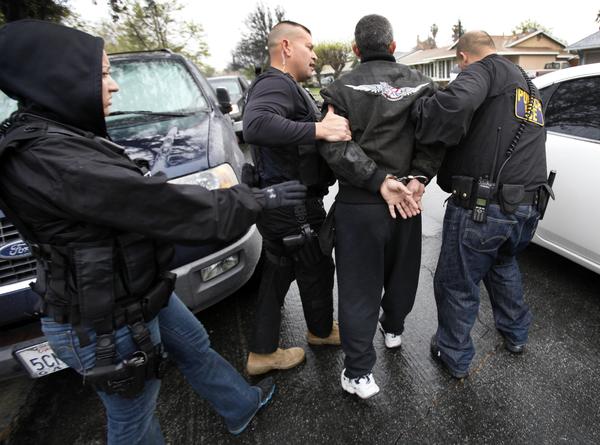
Andres Perez Interviewed About ICE Raids in Austin
Fear of deportation grows as ICE raids increase.

‘Hardware Malfunction’ Slows Down Immigration Courts
A technology breakdown that struck immigration courts a month ago still…
Prosecutorial Discretion on the Rise in Immigration Courts
By Cindy Chang, LA Times January 15, 2014, 3:27 p.m. Immigrants facing deportation are increasingly likely

PRIVACY ALERT! – The government can search your electronic devices at the border and ports of entry!
New York Times Reports District Judge Upholds Government’s Right to Search Electronics at Border Pascal
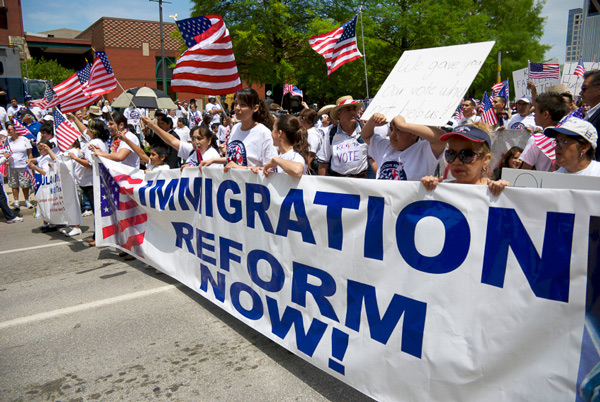
Budget deal may open doors to immigration reform in January
As reported in USA Today: “Republican leaders, led by House Speaker John Boehner, R-Ohio, have

Immigration Lawyers Can Help Employers Petition For H-1B Visas On Time
The USCIS will begin accepting Fiscal Year (“FY”) 2015 H-1B Visa petitions on April 1,

USCIS Now Recognizes Same-Sex Marriages
Do you and your partner think you qualify for immigration benefits (such as a green
New, Updated Form I-9
Don’t get caught unaware! Employment Eligibility Verification Form I-9 has changed. All employers may no

CBP No Longer Issuing a Paper form I-94
Customs and Border Protection (“CBP”) will no longer be issuing paper copies of the arrival/departure
Attorney Andres Perez Interviewed by Fox News About I-9 Audits
Perez & Malik, PLLC attorney Andres Perez featured on Fox News regarding I-9 Audits Perez

Major Reform in Obama Immigration Policy Relieves DREAMers
The Department of Homeland Security announced dramatic reform in the Obama administration’s immigration policy to

Obtaining a Green Card Through Marriage
Green Card Marriage: What Comes After The Walk Down the Aisle? According to the U.S.

I-9 Compliance Tips For Your Business
Within the U.S. business world, employers must meet the demands of the federal government and

Immigration Visas: Revision to Three- and Ten-year Ban
According to USCIS Director Alejandro Mayorkas, a change to the three- and ten-year re-entry bars placed on undocumented immigrants is anticipated to take effect by the end of this year.

Perez & Malik, PLLC Immigration Lawyers to file TPS Pro Bono for local Syrian Nationals
In response to ongoing violence due to political unrest occurring in Syria, the Department of

Obtain a Green Card Through Employment: PERM Labor Certification
In order to work in the USA, foreign workers need to either obtain a temporary work visa (non-immigrant, short-term) or a green card (permanent residency). Most foreign workers begin working in the USA on a temporary work visa and “convert” it to a green card through the labor certification process (PERM).

Applying for a Family based Immigration Visa: 5 Points to Keep in Mind
The U.S. immigration process is complex and intimidating for both sponsors and applicants, however, highly